Russian Missiles Over Poland: Why a Swedish Fighter Jet Held Fire Despite Authorization
A Swedish Gripen pilot had clearance to shoot down a Russian Kh-101 cruise missile in Polish airspace but refrained due to poor weather and the inability to positively identify the target.
 🛡️Security
Photo: TSN
Key points
- A Swedish Gripen pilot had permission to engage a Russian missile over Poland but aborted due to poor visibility and rules of engagement.
- Three airborne targets traveling above 800 km/h breached Polish territory, leaving debris on the ground with no injuries.
- A coalition of Polish, Swedish, and Dutch aircraft operated under the coordination of NATO's command center in Germany.
During a massive overnight assault against western Ukraine, Russian aerial weapons breached Polish airspace. Despite high alert levels and direct authorization from allied command to open fire, a Swedish Air Force JAS 39 Gripen pilot decided against engaging an intercepted Russian Kh-101 cruise missile. The decision was driven by strict engagement protocols and the inability to establish positive identification under severe weather conditions.
Stringent Identification Protocols
Lieutenant General Ireneusz Nowak, Operational Commander of the Polish Armed Forces, stated that neither the pilot nor the aircraft's optoelectronic systems could confirm the target's nature. General Nowak explained that
"weapons were not used tonight because not all conditions for deploying the weapons system were met."Mission coordination was handled by NATO's Combined Air Operations Centre (CAOC) in Uedem, Germany, which delegated engagement authority to the pilots provided safety thresholds were met.
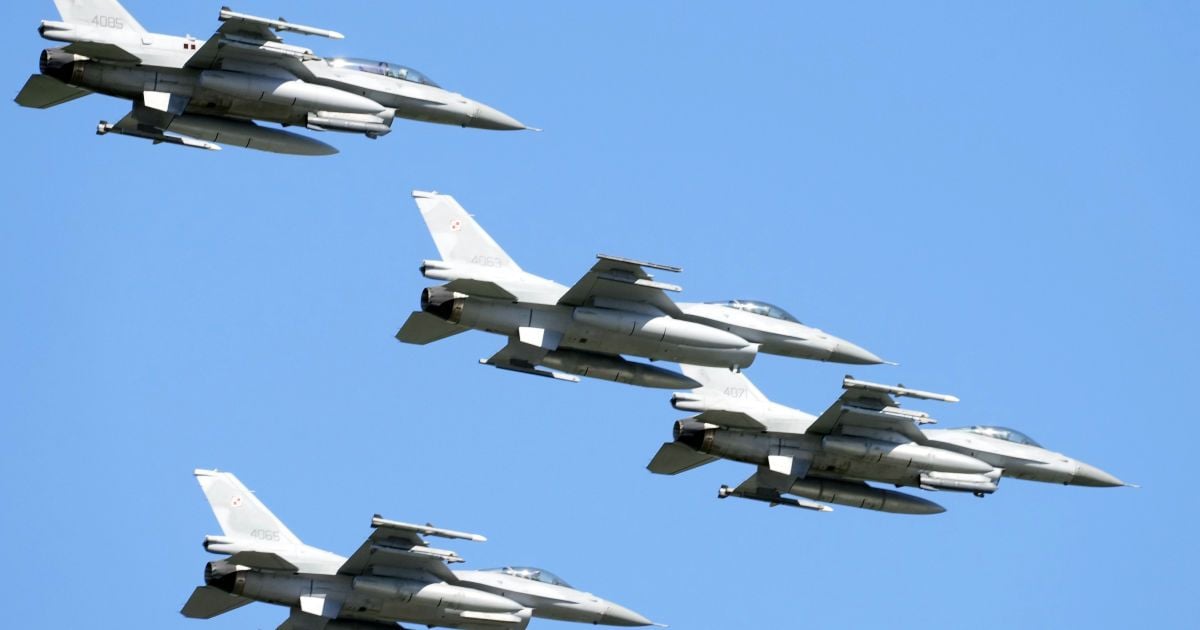
To safeguard Polish airspace, allied forces mobilized significant air assets: two Polish F-16 fighters from the Łask Air Base, two Swedish Gripens, a Saab 340 airborne early warning aircraft, and a Dutch MRTT tanker. Poland escalated its alert level from yellow at 1:40 a.m. to red at 5:49 a.m., sounding sirens across the Lublin and Subcarpathian voivodeships.
Scale of Incursion and Repercussions
Polish defense systems tracked 11 threatening airborne tracks, with three breaching the border at speeds exceeding 800 km/h. Military officials assess that these were either Kh-101 cruise missiles or high-speed "Geran-5" jet drones. Polish Defense Minister Władysław Kosiniak-Kamysz confirmed that debris from three downed objects fell on Polish territory without causing casualties. Polish forces utilized tracking feeds supplied via Ukraine's "Virazh" monitoring network.
Polish Prime Minister Donald Tusk denounced the airspace violation as a "deliberate Russian provocation," while NATO Secretary General Mark Rutte called the event a hazardous and serious breach of allied airspace.
Source TSN — tsn.ua/politika/rosiyski-rakety-nad-polshcheiu-pilot-vynyshchuvacha-mav… ↗
Read next
 🎓Education
Geographical myth: why Everest is not the highest mountain on the planet
While Everest is considered the highest point above sea level, the Mauna Kea volcano in Hawaii significantly exceeds it in total height from its base.
 🏛️Politics
Jared Kushner outlines Trump's conditions for security guarantees to Ukraine
Jared Kushner, special envoy for Donald Trump, stated that the US could consider security guarantees for Ukraine similar to NATO's Article 5 under specific conditions.
 🏙️City
Hourly Power Outage Schedules in Zaporizhzhia for November 23
JSC Zaporizhzhiaoblenergo has released the electricity restriction schedule for regional consumers for Monday, November 23.
 🎭Culture & Sport
The secret to nutritious sardines: why you shouldn't discard the bones
Nutritionists explain that the tiny bones in canned sardines are a valuable source of calcium that consumers often overlook.
 🏛️Politics
Jared Kushner announces start of negotiations on new security architecture
US Special Envoy Jared Kushner announced the start of multilateral consultations involving Ukraine, the EU, and Russia to reach peace agreements.
 🇺🇦Ukraine
Global Cooperation of Autocratic Regimes: The Economist Report
The Economist analysts highlight the strengthening coordination between Russia, China, Iran, and North Korea, posing new challenges to global security.